Monday, August 13, 2012


Spurgeon, the great “soul-winner” preached without embarrassment the doctrines of grace to the very end. In one of his later sermons at the Metropolitan Tabernacle, preached in October 1890 he declared:

“Now brethren, we are to praise God because all spiritual blessings have come to us in the same way as our election came, ‘according as he hath chosen us in him.’ How did that come? Well, it came of his free sovereign grace. He loved us because he would love us. He chose us because he would choose us. ‘You have not chosen me; but I have chosen you.’ If there be any virtue, if there be any praise in us now, he put it there. To the bottomless abyss of his infinite goodness we must trace the election of his grace.” [1]

(From History of the English Calvinistic Baptists, p. 353)


[1] C. H. Spurgeon, Metropolitan Tabernacle Pulpit, Vol. 38, (1892; repr. Edinburgh: Banner of Truth, 1991), p. 355

Sunday, August 12, 2012

Extraordinary Grace


Extraordinary afflictions are not always the punishment of extraordinary sins, but sometimes the trial of extraordinary graces.

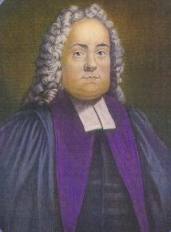
Matthew Henry

Friday, August 10, 2012

The Christian and Cremation


Just a quick thought…

I was asked yesterday what I thought about cremation. I don’t get asked this question very much as of late. I took a few minutes to jot down my thoughts and sent them off in an email (humbled by the opportunity to weigh in on a very sensitive subject.) Without extensive study I offer my thoughts on this subject. I hope they might be of interest and/or help to someone who might have or is currently thinking about this particular issue.

First, I don’t have a problem with cremation. I have yet to see any specific prohibitions in Scripture concerning this subject. I haven’t seen any veiled or implicit principles that might govern it. I think this issues falls under the “conscience” of a Spirit-filled and led believer.

Second, I am well aware that many “believers” in the past have associated the practice of cremation with demonic, tribal, heathen, or ritualistic practices that would be considered “ungodly.” Certainly unbelieving people and people groups have utilized cremation in relationship to one of these areas. This certainly is neither the motive nor reason for God-fearing born-again believers who have chosen this method of “handling the remains of a loved one.”

Thirdly, I truly think that cremation serves as a means of the decomposition process. After all, if left alone, our bodies return to “ashes” and all but “disappear.” When one is cremated the body is rendered to “ashes.”

Fourth, I do not think that our sovereign Lord in all of his majestic power and glory will have any problem “reassembling” those who have been cremated. After all, I don’t think God will have any more trouble resurrecting someone who has been cremated than someone who has been dismembered, run through a wood chipper, has been burned to a crisp, decomposed in the oceans or deserts. When it comes time for the immortal soul to be united with an eternal resurrected body, God will be able to handle it.

Fifth, I believe that the conscience and motives must be the guide. If the motives are clear and they do not violate biblical principles and one’s conscience is clear, and the act is done in faith, then I don’t have any biblical evidence that the Lord is more or less pleased with the practice. Remember you must be convinced in your own mind and be operating in faith or any act can be “sinful.” 

"...for whatever does not proceed from faith is sin." (Romans 14:23, NRSV)

Take this issue before the Lord in fervent, honest, and intimate prayer. If God does not cause you to have unrest or a lack of peace then be settled in your conscience as you seek to honor God in all things including the question of cremation.

So, what do you think?

Thursday, August 9, 2012

The Wrath of God


The Wrath of God

Definition

The wrath of God is His eternal detestation of all unrighteousness. It is the displeasure and indignation of Divine equity against evil. It is the holiness of God stirred into activity against sin. It is the moving cause of that just sentence which He passes upon evil-doers. God is angry against sin because it is a rebelling against His authority, a wrong done to His inviolable sovereignty. Insurrectionists against God’s government shall be made to know that God is the Lord. They shall be made to feel how great that Majesty is which they despise, and how dreadful is that threatened wrath which they so little regarded. Not that God’s anger is a malignant and malicious retaliation, inflicting injury for the sake of it, or in return for injury received. No; while God will vindicate His dominion as Governor of the universe, He will not be vindictive. [1]

Meaning

Therefore, God is no less God because He possesses this divine perfection within His nature. God displays this characteristic of His divine being no differently than He displays any other divine characteristic. God is yet perfect! God does reveal and demonstrate His absolute and divine displeasure against any rebellion toward His nature and character.

Scripture Support

Deuteronomy 32:39-41 (KJV)

“See now that I, even I, am He and there is no god with Me: I kill, and I make alive; I wound, and I heal; neither is there any that can deliver out of My and. For I lift up My hand to heaven, and say, I live forever. If I whet My glittering sword and mine hand take hold on judgment; I will render vengeance to Mine enemies, and will reward them that hate me.” 

Psalms 7:11 (NKJV)

“God is a just judge, And God is angry with the wicked every day.”

Deuteronomy 9:8 (NKJV)

“Also in Horeb you provoked the LORD to wrath, so that the LORD was angry enough with you to have destroyed you.”

Psalm 2:5 (NKJV)

“Then He shall speak to them in His wrath, and distress them in His deep displeasure

Psalm 2:12 (NKJV)

“Kiss the Son, lest He be angry, and you perish in the way, when His wrath is kindled but a little. Blessed are all those who put their trust in Him.”

Psalm 5:5 (NKJV)

“The boastful shall not stand in Your sight; you hate all workers of iniquity.”

Conclusion

God is no less God because His divine nature also contains “wrath.” Although God is restraining His wrath and indignation during this age of grace, there is coming a day when He will unleash His wrath against this earth and mankind. Flee from this wrath that is to come and flee to Christ for protection. Wickedness provokes the wrath of the Holy God of Israel. Fear God and give Him the worship that is due Him and commensurate with His glorious nature.

Application

Meditate frequently on the wrath of God as a divine perfection of His character. Be impressed of God’s hatred for sin and unrighteousness. Develop a true fear of God in your soul, (Hebrews 12:28, 29.) Praise God that if you are in Christ you have been delivered from the wrath of God that is to come upon this earth at any hour, (I Thessalonians 1:10.)


[1] A. W. Pink, The Attributes of God, (Grand Rapids, MI:  Baker Book House), 1975, p.83

Wednesday, August 8, 2012

Steps to the Study of Scripture Part V


STEP NUMBER FOUR

4.  Secondary Literature

Are you tired yet? You should be! You have been working hard thus far. You have finished your basic work on your bible study. Now it is time to use some helps to make sure you have a good grasp and understanding of the portion of scripture you have chosen to study. At this point you want to make sure that in regards to the purpose and place of your text you are on tract. In order to do this, it is time to…

4.1 Consult Commentaries

Don’t avoid commentaries. Know when to use them. Do not read them first! You should have one, maybe two commentaries on each book of the bible. Naturally you don’t have to buy them all at once. You can purchase one or two prior to beginning a new study on a new book of the bible.

You can buy these commentaries used and in paperback in many cases. You don’t have to spend a lot of money on them. I now buy all my books from http://www.cheapestbookprice.com.

It is important to utilize commentaries during your study for at least three (3) reasons:

·        In order to look at various options of scholars for some of the difficulties you have had at various points in your study

·        To see one or two other interpretations of your passage in order to compare your own interpretation and make any necessary adjustments

·        To be alerted to information that you may have overlooked in your study that may prove to be crucial 

4.2  Other Reference Material

Consult some bibliographical aids or helps for additional insight and information. This would be the right time to check bible dictionaries, bible encyclopedias, bible maps and/or charts, bible atlases, cultural help books, church history books, and concordances.

These reference materials can give you tremendous insight into the historical and cultural nuances which might be contained within your passage. Understanding these various nuances can help you further understand the passage you are studying. Remember, to arrive at a right application of the passage, you must arrive the right interpretation. 

Continued on Wednesday, August 15th, 2012

Tuesday, August 7, 2012

Tuesday's Treasure # 1


Over the years I have written a number of quotes, comments, pithy sayings, and poems in the fly-leafs of my bibles. Each Tuesday I am going to share those various entries from my bibles with you. I hope they will be as much of blessing to you as they have been to me. Sometimes I will be able to give credit where credit is due and sometimes I won’t be able to credit the source. I apologize for this to each one who contributed these gems over the last forty years.

Today’s Treasure: 

Questions to ask myself at the conclusion of each time that I have gathered with and as the church:

1.  Did I pray along with the prayers that were prayed in order to “make them my own?”
 
2.  Did I sing along with the hymns thoughtfully and prayerfully, paying attention to the words?

3.  Did I listen actively, intently, and prayerfully as possible to the message?

4.  What was the main point, the proposition, the big idea, the subject of the passage that was preached today?

5.  Did I search my heart for direct and specific application from the message and the Word for me? (What attitude should I develop and what actions should I deploy?)

6.  What did I learn about God today?